
Sustainability
How Our Refill System Works — And Why We Built It This Way
26 March 2026
2 min readThe refill system is one of the things we get asked about most. It's also the thing we spent the most time getting right before we launched.
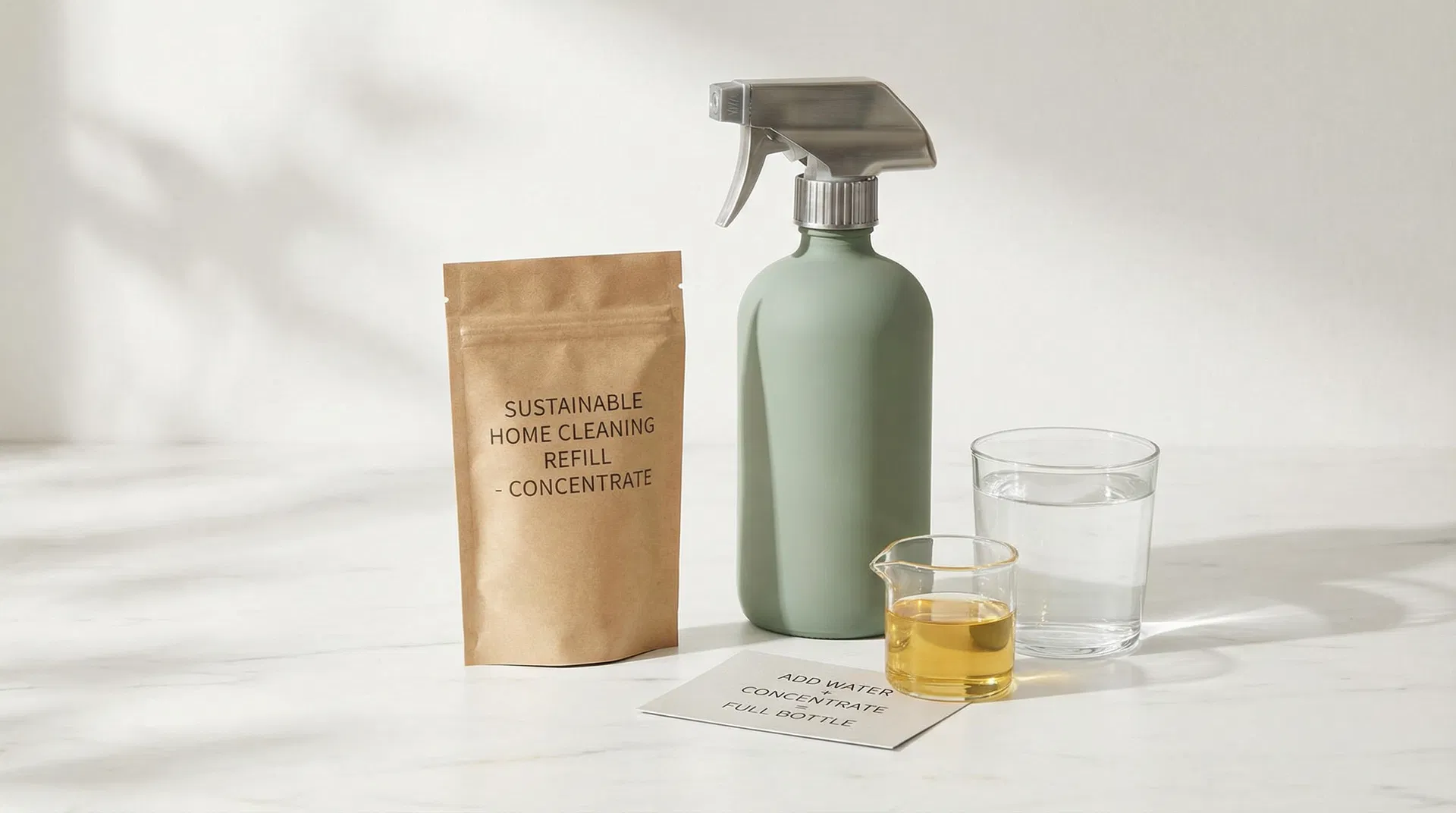
The premise is simple: you buy a bottle once. When it runs out, you buy a concentrate pouch, add water, and you're done. No new bottle. No trip to the shop. Less plastic in the world.
Why most refill systems fall short
A lot of brands offer "refills" that are just smaller versions of the same bottle — still plastic, still single-use, just slightly less of it. Others sell refill pouches that are themselves made from multi-layer plastic laminate, which is harder to recycle than a standard HDPE bottle.
We looked at both of these options and decided they didn't go far enough. If the goal is to reduce the total amount of packaging material in circulation, the refill has to be meaningfully lighter and simpler than the original.
What we're building
Our concentrate pouches are designed to be a fraction of the weight and material of a standard bottle. You add water at home, shake, and your bottle is full again. The formula is concentrated at a ratio that means one pouch equals one full bottle of product.
The pouches are currently in development. We're working through the packaging material selection — we want something that's genuinely recyclable in Australian kerbside systems, not just technically recyclable under specific industrial conditions that most people don't have access to.
We'll be honest: this is taking longer than we'd like. But we'd rather get it right than ship something that looks sustainable but isn't.
When it's coming
We're targeting a refill pouch launch in the second half of 2026. If you want to be the first to know when it's available, sign up for our newsletter at the bottom of the page.
In the meantime, our bottles are made from HDPE — one of the most widely recycled plastics in Australia. When you're done with a bottle, rinse it and put it in your kerbside recycling.
Share this article